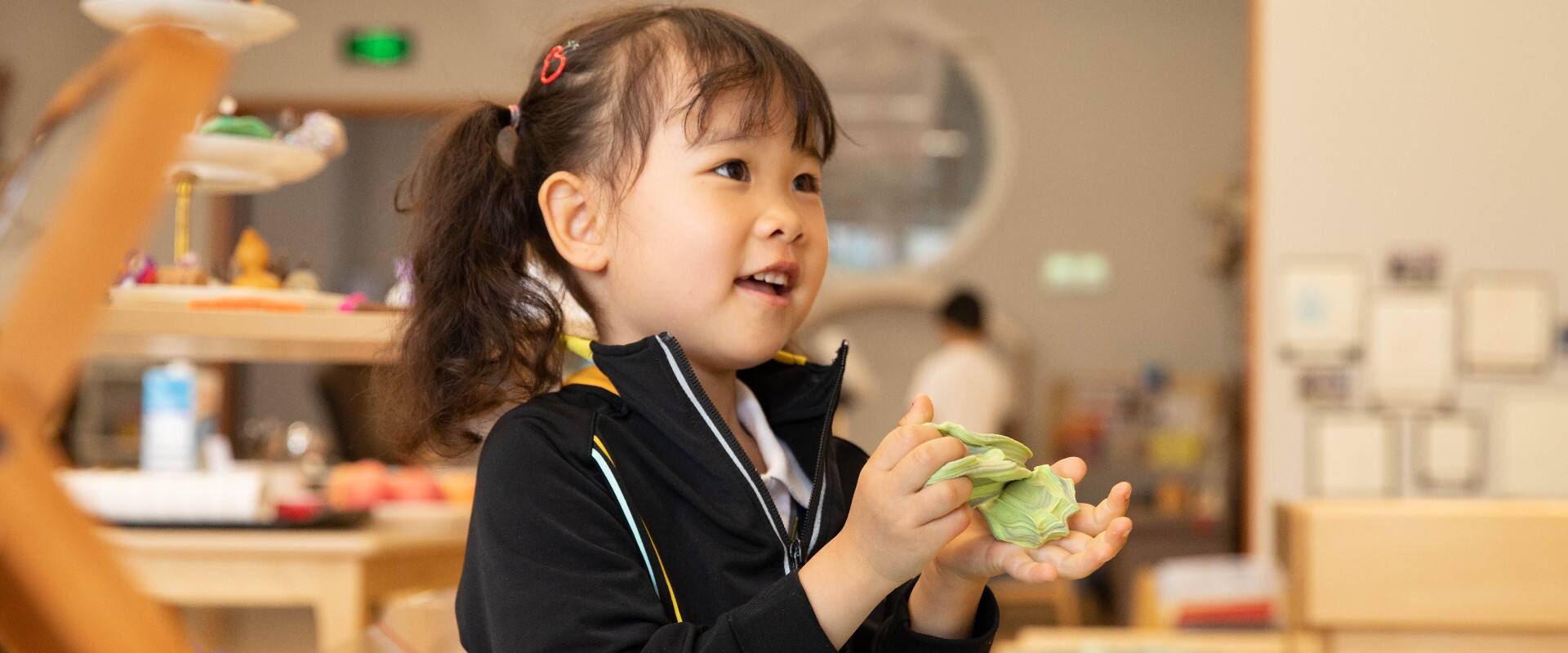
When you step into the Nursery at Hiba Academy Hangzhou, you will be greeted by an unexpected touch of green — a small pocket of nature nestled among the city's concrete and glass. Though our sustainability journey has only just begun, a child-led culture of environmental care is already taking root here. Caring for nature is not taught as a separate lesson, but it is woven into our everyday life. From a rewilded balcony thriving with native plants to a playground cared for by the children themselves, sustainability at Hiba Academy Hangzhou is something we live and breathe together.
Rooted in the principles of Forest Schools and aligned with the Early Years Foundation Stage (EYFS) framework, we foster a culture where children's voices shape decisions and drive meaningful change. Here, even the youngest learners play an active role in creating a more sustainable future.
Rewilding
Where Nature Meets Curiosity
It was during a Continuing Professional Development (CPD) session on sustainable outdoor learning environments that we were introduced to the concept of rewilding—allowing nature to reclaim spaces rather than rigidly controlling them. The idea was simple yet revolutionary: stop weeding, let the grass grow and observe what happens. Inspired, we decided to experiment on our nursery balcony, abandoning the usual manicured lawn in favour of a more natural approach.
What unfolded was nothing short of magical. Within months, wildflowers sprouted, insects buzzed between blossoms and the once-tidy space transformed into a lush, jungle-like haven. Each year since, we have watched in amazement as our balcony has become a thriving ecosystem, teeming with exploration potential for our youngest learners. Children crouched low, discovering beetles under leaves, watching caterpillars munch on nettles and following butterflies from flower to flower. The joy and curiosity on their faces confirmed what we had suspected: nature, left to its own devices, was the best teacher.
Emboldened by this success, we applied the same principles to our entire playground. Gone were the neatly mowed lawns and bare patches of dirt, and instead, we allowed native plants to flourish, creating wild meadows, mini-woodland areas and bug-friendly corners. The transformation was astonishing. Birds nested in our many trees, bees hovered between flowers and butterflies—once a rare sight—now fluttered everywhere. The children, armed with magnifying glasses and observation jars, became little scientists, documenting the return of wildlife with excitement.
Crucially, the children helped shape this space and continue to guide its development. Their input, their wonder and their questions motivate us as educators to move forward, to know we are on the right path, that we are capable of living without the manicured spaces we are so used to on our compounds, and instead to bring a wilder version of nature right to our doors. Our outdoor spaces have now become a living extension of our classrooms, where lessons on life cycles, habitats and biodiversity happen organically. The children do not just learn about nature—they experience it, care for it and develop a deep connection to it. By stepping back and letting nature lead, we have not only enriched our environment but also ignited a sense of wonder and stewardship in our learners that no textbook could ever replicate.
This journey has taught us that sometimes, the best way to nurture young minds is to simply let things grow.
From Seed to Table
Learning Through Food-Growing
Building on our rewilding success, we introduced food-growing projects to make sustainability tangible. Each year, our nursery children plant and nurture simple crops like cucumbers, cherry tomatoes and green beans in balcony beds. The process is intentionally hands-on: carrying watering cans under Hangzhou's summer sun teaches perseverance, while tracking growth fosters patience.
At harvest time, we cook and share the produce together, reinforcing the link between effort and nourishment. This experience extends to snack time, where children now think more carefully about waste. By grounding abstract ideas like 'food provenance' in real-world experiences, we show that sustainability is as much about appreciation as action.
Tidy Patrol
Shared Responsibility in Action
Alongside nature-based projects, our Tidy Patrol initiative encourages children to take ownership of their shared spaces. Now in its third year, this daily routine sees small groups of our nursery children returning toys, picking up litter and modelling care for the playground. Participants wear high-visibility jackets that proudly display the words 'Tidy Patrol' bilingually, as this is a visible reminder of their role—one that has inspired younger children to join in.
This early experience of leadership reinforces that sustainability is a shared responsibility. When children remind peers to tidy up or conserve resources, they are not just following rules—they are upholding values they have helped shape.
Ethical Animal Encounters
A Future Focus
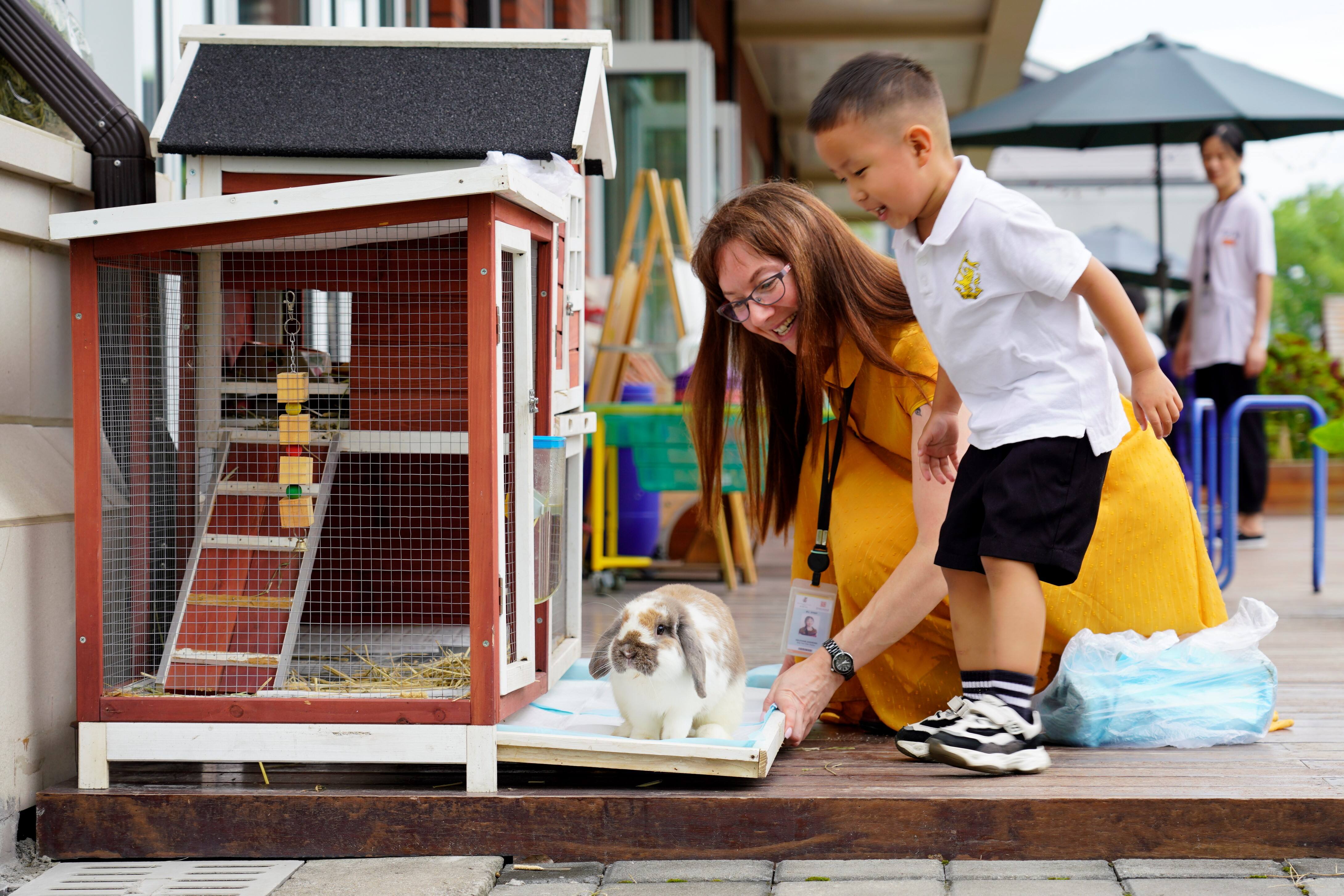
Looking ahead, we plan to introduce ethical animal encounters to deepen outdoor learning. Working with local vets and educators, we will select species—such as stick insects or native Zhejiang species of goats, like the Hu breed—suited to captivity and our climate. Their habitats will mirror natural ecosystems, doing our best to ensure welfare whilst offering children opportunities for observation and care.
These encounters will tie into the curriculum: studying a goat breeding cycle could link to seasons, whilst observing tadpoles in our rain pond might spark discussions on water conservation. Animals will serve as co-teachers, nurturing empathy and curiosity without compromising their wellbeing.
Inspired by the children's growing fascination with nature, we are laying the groundwork for meaningful sustainability initiatives. While these ideas are still in progress, we are committed to turning them into reality. Together, we plan to adopt energy-saving practices—like switching off unused lights—as a shared responsibility. We aim to deepen discussions about water conservation, linking everyday actions to the wider global challenge of scarcity. Our vision includes a 'Scrap Garden', where food waste will be transformed into nourishment for plants, teaching the children the cycle of growth and renewal.
Most excitingly, we hope to one day create our very own forest—a space filled with native trees, winding sensory pathways, and tiny habitats teeming with life. Though these plans are still taking shape, we dream of a future where children can explore a wild, thriving woodland, sparking curiosity and wonder for years to come. This journey is just beginning, but with each small step, we move closer to a greener, more sustainable learning environment, shaped by the voices and imaginations of our youngest learners.
Why This Approach Matters
In a city of skyscrapers and rapid development, our Nursery shows the power of small, intentional actions. Rewilding teaches that beauty exists beyond tidiness, food-growing roots sustainability in lived experience, and Tidy Patrol models collective responsibility. Together, they demonstrate that environmental stewardship is not abstract—it is shaped daily through simple choices like watering a plant or tidying a shared space.
By giving children real responsibility, we nurture not just future environmentalists but critical thinkers, empathetic collaborators and mindful problem-solvers. These are the skills that will help them face tomorrow's challenges—not because they were told to, but because they understand why it matters.
Our Nursery's story continues to unfold. Each season, the rewilded balcony changes, and each year, new children join Tidy Patrol, and each harvest brings the joy of tasting what they have grown. At its core is the belief that children—given trust, tools and meaningful opportunities—can help shape a better world, one small act at a time.
_1724823574088.png?x-oss-process=image/interlace,1/resize,m_lfit,w_1200/quality,q_90/format,webp)